Edison, NJ · Garage Door Service
Edison Garage Door Pros installs insulated garage doors for Edison, NJ homes built mostly in the 1960s and 70s, sized right for our cold winters and older framing.
Most of the housing stock in this part of Middlesex County went up between 1938 and 2001, with the median build year sitting around 1963. Across the 116 named areas that make up the wider service territory, the bulk of that stock is 1960s and 70s construction. That matters for garage doors because a door installed when the house was built is now old enough to be on its second or third opener, and the panel itself is usually the original single-layer steel or a wood-look door with no rigid insulation behind it.
Edison also sits in a cold-climate band with severe winter exposure. A door built in 1963 wasn't spec'd for the kind of temperature swings a garage sees now, especially if that garage backs onto a bedroom or a laundry room. Cold air finds every gap in an old bottom seal, warped panel, or shrunk wood stile. That's the real driver behind most installation calls we get - not a broken part, but a door that's simply aged out of doing its job in a house this old, in a climate this cold. With 245,847 owner-occupied houses across the region carrying similar-age doors, this isn't an isolated problem on one block.
How long an installation takes depends on what's behind the old door, not just the door itself. A straight swap - same opening, same track width, no reframing - moves fast. A house from the 1960s stock common around here often has an opening that's settled slightly out of square over sixty years, which means shimming the jambs or adjusting the header before the new door goes in. We won't quote you a number of hours until we've looked at the opening in person, because guessing on an old frame is how a door ends up out of plumb six months later.
One honest limitation: if you want a custom width, a specific insulation rating, or a color that isn't a stock option, the door itself has to be ordered, and that lead time is outside our control. We can install the same day we're on site if you're working with a door we carry, but a special order means a return trip. We'd rather tell you that up front than have you waiting on a promise we can't keep.
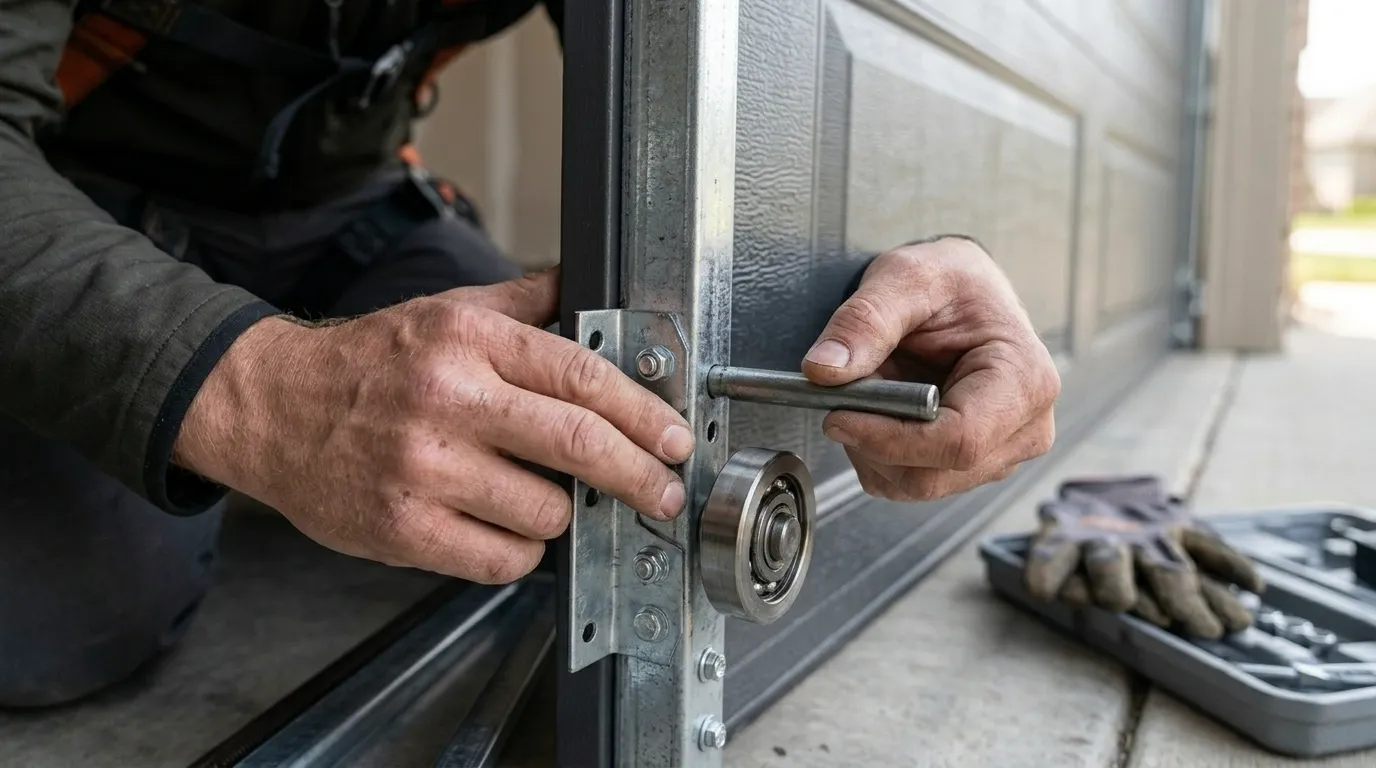
We start by measuring the actual opening, not the door that's currently in it, since decades of settling can shift dimensions by more than most homeowners expect. From there we pull the old door, track, and hardware, check the header and jambs for square, and set new track sized to the opening we measured.
Given the cold-climate exposure this area sees, we default to recommending an insulated door - solid core, sealed bottom, weatherstripped jambs - over a single-layer replacement, because a non-insulated door here just repeats the same problem in a few winters. We mount the door, balance the springs to the door's actual weight, and test the opener travel and force settings so it doesn't slam or strain on a cold morning when the metal contracts. Everything gets a final check under load before we call the job done.
If your door is sagging in the middle, has a bottom panel that's warped or waterlogged-looking, or leaves a visible gap at the floor even when closed, that's a door past its working life, not a fix. If the opener strains, reverses, or runs slower in January than it does in July, the door itself may have gotten heavier or stiffer than the opener was ever set to handle - a common story on original doors from the 1960s and 70s housing stock across this area.
A door that still opens and closes evenly, seals tight at the bottom, and doesn't visibly flex isn't a candidate for replacement yet, even if it's old. Installation is the right call when the panel is failing, the insulation is gone, or the size no longer matches what your opener or your winters need - not just because a door has some age on it.
There's no single age cutoff, but on the original doors common in this area's 1960s and 70s housing stock, we usually see panel warping, seal failure, or spring fatigue serious enough that patching one part just means the next part fails within a year. If the door is sagging or the bottom seal no longer closes flush, replacement is usually the better spend.
Yes. Given the cold-climate exposure in this area, we generally recommend an insulated door over a single-layer replacement, since a non-insulated panel doesn't hold up well against sustained cold, especially on garages attached to living space.
Sometimes. Houses from the 1938-2001 build range common here can have openings that have shifted slightly out of square over the decades. We check the jambs and header on site before quoting, since guessing on an old frame risks a door that's out of plumb later.
Not usually. A custom width, insulation rating, or non-stock color has to be special ordered, and that lead time is outside our control. Stock sizes we carry can often go in the same visit.
Call now or request a free quote - same-day service on most repairs, upfront written pricing.