Edison, NJ · Garage Door Service
Edison, NJ homes mostly date to the 1960s and 70s, long before doors carried insulation standards. See what that means for repair and replacement costs.
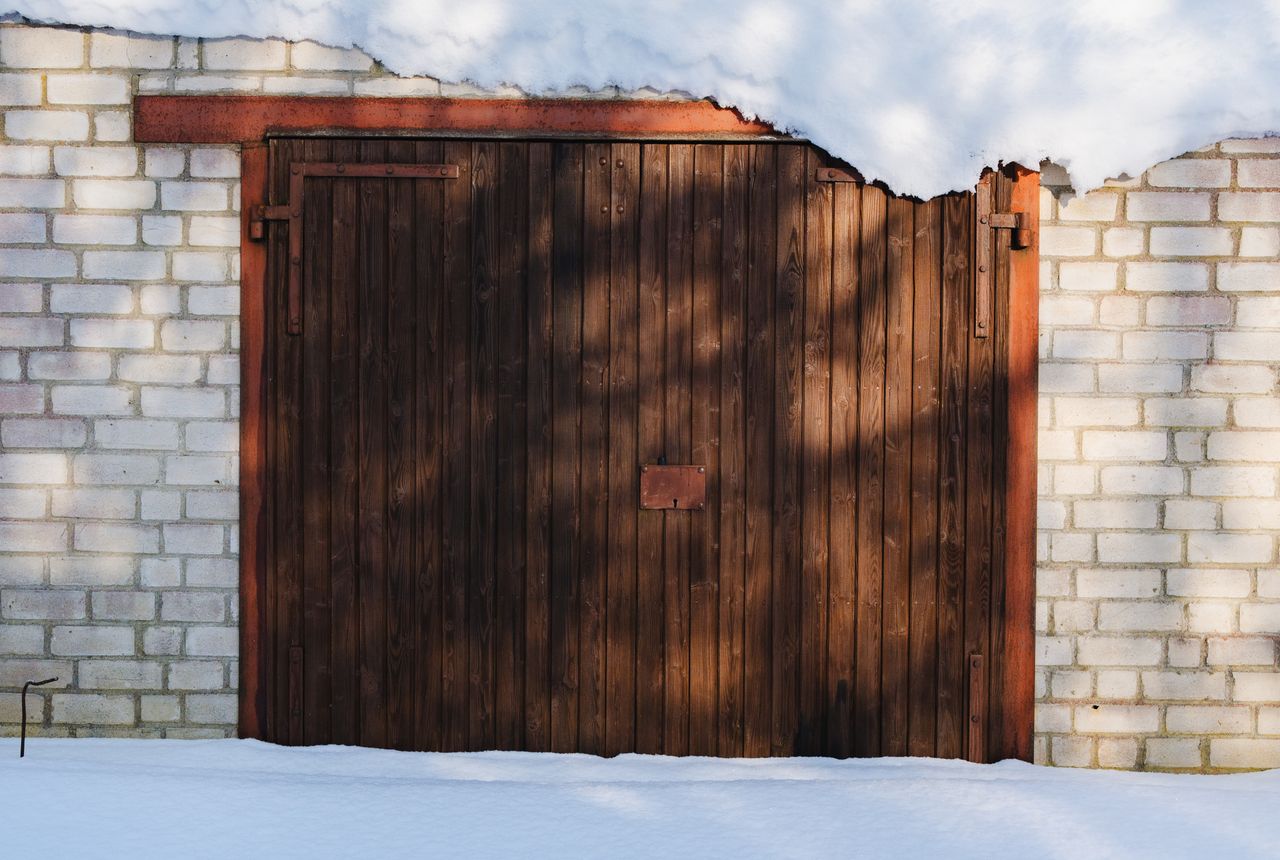
Edison's housing stock runs from 1938 to 2001, with the median build year landing at 1963. That single number explains most of the service calls we get. A house framed in the early 1960s got a garage door built to the standards of the early 1960s, which is to say none at all on the insulation side. Steel doors from that era are a single skin of metal over an open frame, sometimes with a thin fiberboard backing that has usually crumbled by now. Wood doors from the same period have swollen, cracked, and been repainted more times than anyone can count.
Across the broader area of 116 named neighborhoods, the pattern holds: most of what's on the ground went up in the 1960s and 70s, before foam-core doors existed as a product category. What we find when we open a call in Edison is rarely a door that's failed outright. It's a door that was never built to do the job it's now being asked to do, sitting in an opening that's decades older than any part on it.
We don't quote a number without seeing the door and the opening, so nothing here is a price. What drives the cost on a house like the ones common in Edison is usually one of three things: the track has to be reset because the opening has shifted slightly over sixty-plus years of settling, the door itself is a single-skin steel or solid wood panel with no insulation to preserve if you're already replacing hardware, or the opener is old enough that its gears are original and not the kind of thing anyone stocks new.
A repair on a door with no insulation is usually cheaper up front than a repair that also has to account for a foam core, but it's also a repair on a door that's going to keep losing heat and moisture-cycling the way it always has. That's a real tradeoff, not a sales pitch, and it's worth thinking through before you commit to fixing versus replacing. Replacement isn't automatically the right call just because a door is old - sometimes the spring, cable, or roller failure is a five-minute fix on an otherwise sound door, and we'll tell you that instead of upselling a new one.
The climate band covering Edison is classed cold and severe, which means the garage door isn't just a moving part, it's part of the thermal envelope whether the house was designed that way or not. On a door built before insulation standards existed, that gap between conditioned space and outside air runs straight through the panel every winter. Steel contracts in cold weather and swells in humidity; wood does both more slowly but more permanently, which is why so many original wood doors from the 1960s stock have visible warp at the bottom rail.
Cold and severe conditions are also what kills torsion springs early. A spring rated for a certain cycle count under moderate conditions gets fewer real years out of it here, because the metal is working through a wider temperature swing on every open and close. That's not unique to any one house - it's what the climate band means for every door built to a pre-insulation spec, and it's most of what we're looking at when a spring lets go without warning on a door that looked fine the day before.
The most common mistake we see on houses from Edison's 1960s and 70s building wave is treating a symptom as the whole problem. A door that's suddenly noisy or hard to lift often gets a can of lubricant and a new remote battery, when the actual issue is a track that's out of plumb because the opening itself has moved slightly over sixty years - lubricant doesn't fix geometry.
The other mistake is assuming that because the door still closes, the opener is fine to keep running indefinitely. On original or early-replacement openers from that era, the safety reversal sensors are either missing entirely or long out of alignment, and that's not a maintenance item to defer. With median household income in this service area at $124,065 across 245,847 owner-occupied houses, most homeowners here can afford to fix this properly rather than patch it - the barrier is usually not knowing the door's age is the actual issue, not the budget for the fix.
Most houses in Edison have doors built before insulation was standard, so the panel you're touching is a single layer of steel or wood with nothing behind it. That's original to the 1963 median build year for this area, not a sign your specific door has failed - it's just doing what an uninsulated door does in a cold climate.
It depends on what else is wrong. If the springs, track, and opener are sound, adding insulation alone may not justify a full replacement. But if you're already facing a spring or cable repair on a door built before insulation rules existed, that's the point where replacing the panel starts to make more sense than repairing around it.
On openers original to houses from the 1960s-70s wave common in Edison, the sensors may be missing or misaligned. Wave a broom handle through the door's path while it's closing - it should reverse immediately. If it doesn't, that's not something to defer.
Call now or request a free quote - same-day service on most repairs, upfront written pricing.