Edison, NJ · Garage Door Service
South Plainfield homes built around 1962 often still run original garage door hardware. We install new doors built for the cold, 4 miles from our Edison shop.
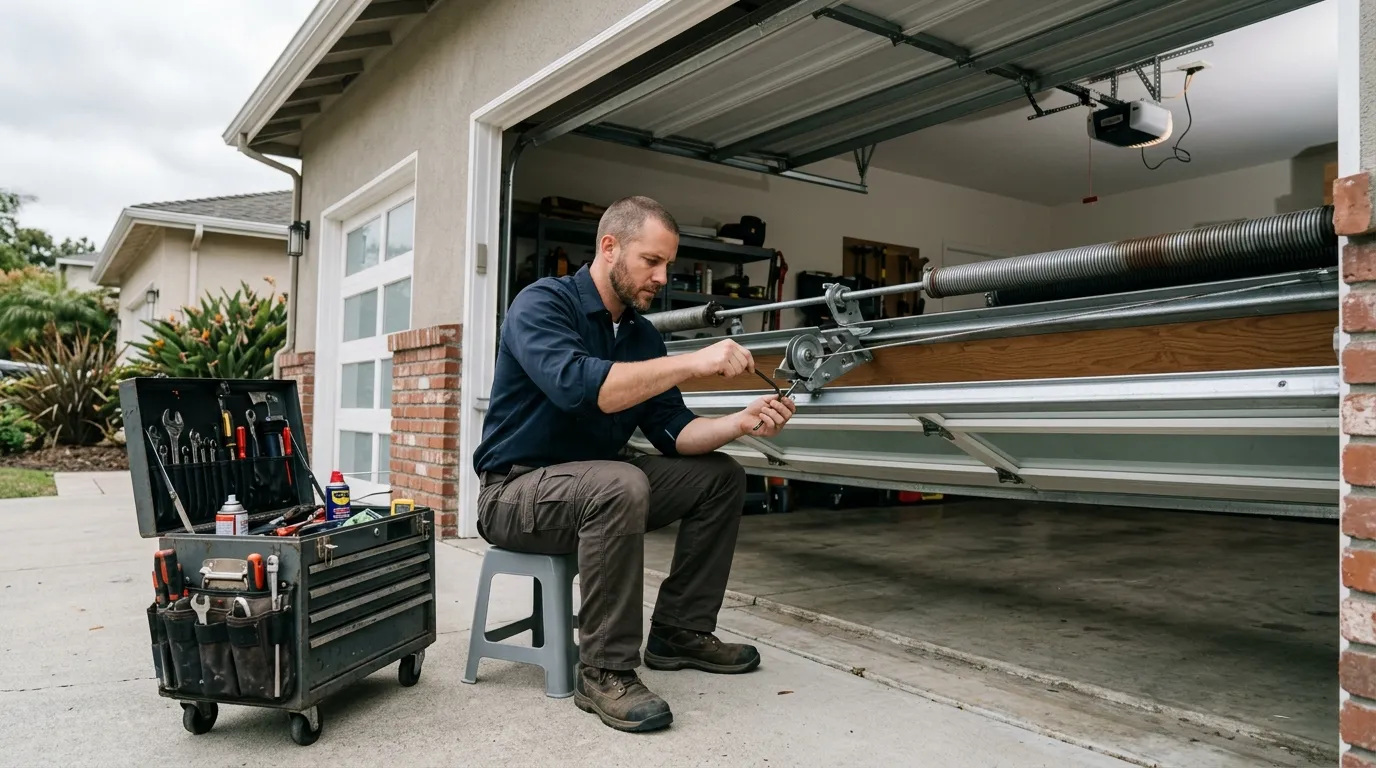
We drive out from Edison, four miles up the road, and the first thing we check on a South Plainfield job isn't the door panel - it's the hardware behind it. A house built around 1962 was framed for a door and track spec that hasn't been made the same way in decades, so before we quote anything we measure the opening, check the header clearance, and look at what the track and spring anchor points are actually bolted into. Most of the time the rough opening is fine and we can set a new insulated steel or composite door straight into it with a modern torsion spring system sized to the door weight, not whatever was on the house originally.
Where it gets slower is odd openings - some of these 1960s garages were framed a few inches narrower or shorter than today's standard sizes, and a non-standard door has to be special-ordered rather than pulled off a shelf. That's the honest limitation: if your opening doesn't match a stock width, expect the manufacturer lead time to add to the job, not the install day itself. Once the door's on site, install is a single day, including the opener if you're replacing that too.
We do the same install whether it's a two-car garage on an older ranch or a smaller single bay - the process doesn't change, only the parts list does.
On a house from the early 1960s, the door itself has usually been swapped once or twice over sixty years, but the track hardware, the torsion spring anchor bracket, and sometimes the header reinforcement are original. That mismatch - new panel, old bones - is the most common problem we find on a South Plainfield install call. The bracket that held a lighter single-layer steel door in 1962 isn't rated for a heavier insulated double door, and if a previous install just hung a new door on the old bracket, it's been running overloaded the whole time.
Rust at the bottom bracket and track is the other recurring issue, mostly from decades of runoff and salt tracked in during winter. It's not dramatic until the track finally lets go on one side, which usually happens under load - meaning while the door is opening or closing, not sitting still. We also see openers original to a 1980s or 90s retrofit still running on rail systems that were never rated for today's heavier insulated doors, straining the motor every cycle.
None of this is dangerous to live with day to day, but it's exactly the kind of thing that fails without warning, usually on the coldest morning of the year when the spring is under the most tension.
South Plainfield's housing stock clusters tightly around 1962, part of the broader wave of 1960s and 70s construction that shaped most of this service area. That means a lot of garages here were built to the same spec in the same few years - same header height, same track spacing, same anchor hardware - which is useful for us because it means we know what to expect before we even measure. It's also why so many houses in town are due for the same fix around the same time: the hardware ages out together.
The cold is the other half of it. This part of New Jersey sits in a severe cold climate band, and a garage door goes through more freeze-thaw cycling than almost anything else on a house - it's the largest moving opening, and it moves every single day, all winter. Steel contracts, lubricant thickens, and a spring that's been fine for fifty-nine winters can finally give out on the sixtieth. None of that is specific to any one street in town; it's the shared condition of a neighborhood that was built out fast and built to the same plan.
We don't guess at this from the truck - it's why we ask the build year on the phone before we ask anything else.
We don't quote a flat number for a South Plainfield install over the phone, because the cost splits mainly on two things: whether the opening is a standard size or one of the narrower 1960s-era widths that needs a special order, and whether the old anchor hardware and header can be reused or need reinforcing. Both of those only show up once we've measured.
What we can say is that South Plainfield's median household income runs $126,063, a bit above the $124,065 median across the wider area we cover from Edison - and in practice that tracks with what we see on these calls. More owners here choose a full door and opener replacement over another round of spring and track patchwork, especially once a house has gone through two or three repairs on the same original hardware. With 8,280 households in town, most built out in that same early-1960s stretch, we're not describing a rare case - we're describing the typical one.
If you want a number against your actual opening rather than a range, that's a site visit, not a phone call - see our South Plainfield service page for what that visit covers, or check our Edison installation page for how we handle the job company-wide.
The door panel itself has usually been replaced at least once over sixty years, but the track, header bracket, and spring anchor point are often still original. That's the part we check first, since hardware sized for a 1960s door isn't always rated for a heavier modern insulated one.
About four miles. We travel out for installs and estimates the same way we do anywhere else in the area we cover - there's no separate branch here, just the same crew and truck coming from Edison.
Usually, yes. Most openings from that era match today's standard widths. Where they don't - a few inches narrower or shorter than current stock sizes - the door has to be special-ordered, which adds to the manufacturer lead time rather than the install itself.
We can, and it's common on these jobs since an opener original to an older retrofit often isn't rated for a heavier insulated door. It's not required, though - if your current opener is newer and rated for the load, we'll say so rather than sell you one you don't need.
Call now or request a free quote - same-day service on most repairs, upfront written pricing.